

Local SEO in digital marketing has become essential for businesses aiming to attract nearby customers and stand out in local search results.
Optimizing a Google Business Profile, ensuring consistent NAP (Name, Address, Phone) information, generating quality reviews, and creating location-specific content all contribute to higher visibility and more customer interactions.
For businesses in competitive markets like Abuja, Nigeria, implementing these strategies effectively requires both technical SEO knowledge and an understanding of local search behavior.
By focusing on the right fundamentals and prioritizing actions that produce measurable results, companies can steadily increase website traffic, store visits, and calls from potential customers, turning local search presence into real business growth.
What is Local SEO in Digital Marketing?
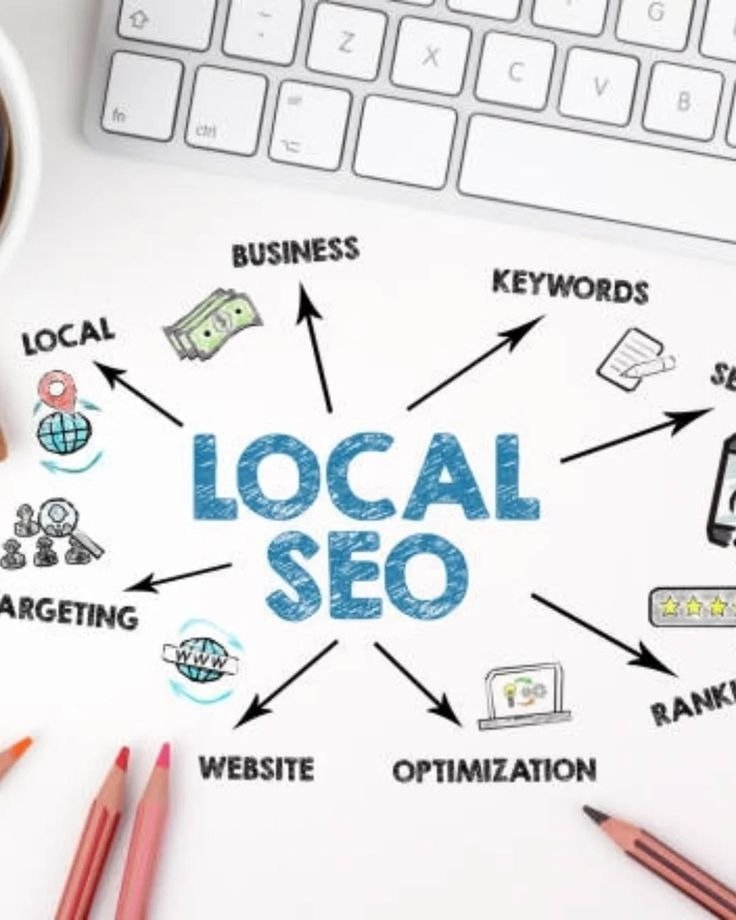
Local SEO in digital marketing is the set of techniques that help businesses appear when nearby customers search for services or products.
At its core, local SEO in digital marketing combines on-page optimization, local business listings, review management, and proximity signals so search engines show your business to people who are physically near you or searching with local intent.
Unlike broad national SEO, local SEO in digital marketing prioritizes queries like “plumber near me,” “best bakery in Abuja,” or “digital marketing agency in Abuja, Nigeria,” and optimizes how you show up in the local pack, maps, and localized organic results.
HubSpot and BrightLocal both explain that local search focuses on combining relevance, distance, and prominence to serve the right local result, which is why local SEO in digital marketing is structured differently from general SEO.
Local SEO in digital marketing is practical: it turns searches into visits and phone calls.
For service businesses that rely on foot traffic or local leads—shops, clinics, repair services, law firms—local SEO in digital marketing is one of the highest-ROI channels because intent is already high.
Local queries are often transactional; users search with purchase intent, so ranking well for local keywords means you’re meeting customers where they are.
BrightLocal’s research and Backlinko’s local-SEO roundups document how often local queries convert into store visits and calls, reinforcing why local SEO in digital marketing should be a priority in any SME’s growth plan.
Why Local SEO in Digital Marketing Matters in Nigeria Today
Nigeria’s digital economy is growing fast, and local searches are a major driver of offline action.
Consumers increasingly use smartphones to find nearby services, check opening hours, and read reviews before buying.
BrightLocal and other industry trackers report that a very large share of local searches lead to an in-person visit within a short radius—evidence that local SEO in digital marketing directly impacts foot traffic and local sales.
For Nigerian businesses, optimizing local SEO in digital marketing can be the difference between being the first option a customer sees and being invisible on page one.
Local SEO in digital marketing is also cost-efficient. Paid ads can generate leads fast, but local SEO in digital marketing builds durable visibility that compounds: accurate listings, consistent NAP (name, address, phone), and positive reviews increase your prominence over time.
That permanence matters in cities like Abuja, Lagos, and Port Harcourt where competition for local clicks is high.
If you operate a physical business or a local service, investing resources in local SEO digital marketing yields a steady stream of qualified, nearby customers who are ready to take action.
The 70–20–10 Rule in Digital Marketing and How to Apply it to Local SEO
The 70 20 10 rule in digital marketing is a practical allocation framework to balance stable, improving, and experimental work.
Typically, 70% of effort and budget goes to what already works (core channels and proven campaigns), 20% to optimization and new ideas with low risk, and 10% to high-risk experiments that could produce breakthrough gains.
When you map the 70 20 10 rule in digital marketing to local SEO, it looks like this:
- 70% (Core): Ensure your listings, on-page local SEO, schema markup, and local citations are perfect; keep Google Business Profile optimized, maintain consistent NAP across directories, and prioritize pages that match local intent. These steady activities power most local traffic.
- 20% (Improve): Run A/B tests on landing page CTAs, refine schema for products and services, deepen localized content (city pages, local guides), and optimize for mobile speed and Core Web Vitals—these lift conversion rates and visibility.
- 10% (Experiment): Try new local content formats (interactive maps, community stories), run hyperlocal paid tests on Google Maps and local social ads, or pilot partnerships and UGC campaigns to see if you can unlock outsized growth.
Using the 70 20 10 rule in digital marketing ensures your local SEO investments are stable, continually improving, and occasionally bold—preventing the common trap of spending all budget on unproven experiments while neglecting the fundamentals.
A balanced application of the 70 20 10 rule in digital marketing gives local campaigns the steady foundation they need to scale.
The 80/20 Rule for SEO
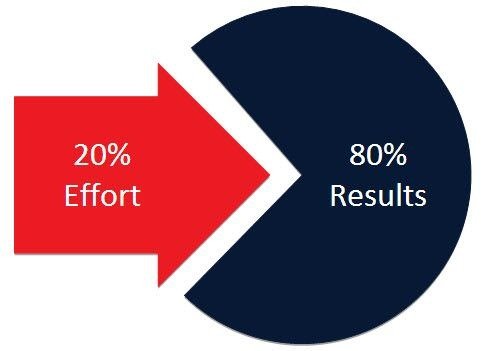
The 80/20 rule for SEO (the Pareto principle applied to search) states that roughly 20% of your SEO activities produce about 80% of your outcomes.
In practice, the 80/20 rule for SEO asks you to identify the high-impact pages, keywords, and technical fixes that actually move traffic and conversions, then focus your energy there.
For local SEO in digital marketing, the 80/20 rule for SEO translates as:
- Identify the small subset of local pages or keywords that already capture impressions and clicks—optimizing these will usually yield the fastest gains.
- Fix the technical bottlenecks that block search engines (indexation, mobile usability, site speed) on those priority pages—small technical changes frequently deliver large visibility improvements.
- Double down on citation consistency and review acquisition for the handful of locations or services that lead to the most revenue.
Articles and practitioners who explain the 80/20 rule for SEO emphasize that exhaustive checklists are less productive than targeted effort on the few things that move the needle.
In short, apply the 80/20 rule for SEO to focus limited resources on high-impact local pages, local keywords, and reputation signals to get outsized results.
The 3-3-3 Rule in Marketing and How Nigerian Businesses Use it for Local Campaigns
The 3 3 3 in marketing (often written as the 3-3-3 rule) is a minimalist framework that forces clarity: choose three core messages, three target audience segments, and three primary channels.
Applied to local SEO in digital marketing it looks like this:
- Three core messages: For example—“fast service,” “local trust,” and “affordable rates.” Use these consistently across your Google Business Profile, landing pages, and ads so searchers get the same promise whether they find you via Maps, organic listing, or social.
- Three audiences: Homeowners within five miles, small businesses in your city, and first-time buyers looking for introductory offers. Target each audience with slightly different local landing pages and tailored review snippets to increase relevance.
- Three channels: Google Business Profile + local organic pages, Facebook/Instagram local ads, and local directories or classifieds. Keep these three channels updated and synchronized.
Using the 3 3 3 in marketing reduces noise and helps teams execute focused campaigns: when your local SEO in digital marketing uses a 3-3-3 approach you end up with coherent messaging, easier measurement, and faster optimization loops.
Resources that explain the 3 3 3 in marketing highlight how simplicity creates consistency, which is especially useful for small teams managing local campaigns in Nigeria.
Understanding Timelines, Reviews, and Multi Location Impact in Local SEO in Digital Marketing
Local SEO in digital marketing does not produce results at the same speed for every business, but certain patterns hold true.
Foundational adjustments such as fixing your Google Business Profile, correcting NAP details across directories, and completing core listing fields often lead to early movement within days or a few weeks.
These gains reflect how quickly search engines reward accuracy and completeness.
Broader ranking improvements for more competitive local keywords take longer because they depend on content depth, authority growth, and behavior signals that accumulate gradually.
Businesses that apply the 80/20 approach usually shorten this timeline by optimizing their highest impact pages, listings, and keywords first.
Once this is in place, a structured measurement window between thirty and ninety days is usually enough to judge whether your early optimizations are gaining traction.
As the foundational work begins to settle, review volume becomes a decisive factor in how well your brand performs in local search.
The more authentic reviews you collect, the more confidently customers engage with your listing, which directly affects click behavior.
BrightLocal and other industry studies consistently show that review signals influence both visibility and conversions, so strengthening this area is not optional.
Encouraging customers to leave feedback, replying consistently, and maintaining quality across platforms signal that your brand is active and reliable.
This builds a stronger presence in local SERPs, which supports the gains made during earlier technical fixes.
These same principles scale into multi location operations, but the execution changes.
Multi location brands need dedicated location pages that contain unique local content, separate Google Business Profiles for each physical site, and structured citation management that keeps every listing aligned.
Centralizing your highest impact efforts first fits well with the 70 20 10 framework. Use seventy percent of your resources to maintain system wide fundamentals.
Allocate twenty percent to optimization work that is unique to each location. Reserve ten percent for localized experiments designed to identify geographic opportunities that can be rolled out network wide.
When these elements work together, multi location brands gain agility and faster ranking performance across multiple markets.
This progression from setup speed, to review influence, to multi branch scalability reflects the natural maturity curve of local SEO in digital marketing.
It gives single location businesses a clear roadmap and helps larger brands maintain order and performance as they expand.
Practical Steps to Start Local SEO in Digital Marketing
Audit and Fix: Listings, NAP, and Google Business Profile (GBP)
Start with an audit of your Google Business Profile and directory listings.
Ensure the business name, exact address, phone number, and hours are consistent across Google, Facebook, industry directories, and local platforms.
Add accurate categories and service areas in GBP, verify the profile, and enable messaging and booking features if relevant.
For businesses in Nigeria, include local contact formats and any accepted payment options to reduce friction.
This foundational work is the kind of core 70% activity in the 70 20 10 rule in digital marketing that prevents lost clicks and missed customers.
Use a citation or tracker (like BrightLocal) to monitor citation accuracy and errors.
Content and Keywords: Local Landing Pages and Schema
Create localized pages for each key service and city you serve. Use the focus phrase naturally (e.g., “local SEO in digital marketing services in Abuja”) inside H1s, meta, and early paragraphs, but prioritize helpful, original content that answers local queries.
Add LocalBusiness and ServiceStructuredData (schema) to pages to help search engines link your content to GBP.
The 80/20 rule for SEO says focus schema and content on the pages that already attract traffic to get fast wins. Use UTM tracking to measure which pages drive calls and conversions.
Reviews and Reputation: Solicit, Respond, and Surface
Design a review acquisition flow: request reviews after service via SMS or email with a short link to your GBP.
Respond to reviews within 48–72 hours to build trust and signal engagement to search engines. Highlight top reviews on landing pages and embed recent testimonials to increase conversion.
In many markets, including Nigeria, social proof is a decisive factor for local customers; solid review volumes can lift rankings and click-throughs.
Local Links and Partnerships: Community Signals
Earn links from local chambers, event sites, suppliers, and community blogs. Sponsor a neighborhood event or publish a local resource guide to attract relevant backlinks.
The 3-3-3 rule in marketing encourages focusing on a tight set of channels—partnering with three local organizations to create content or events that generate links, mentions, and referral traffic.
Those local endorsements increase your prominence in local pack algorithms.
How Moreed Digital Solutions Strengthens Local SEO in Digital Marketing

The real value of a digital marketing agency in Abuja, Nigeria is rarely in the noise of promotions.
It is in understanding the texture of a local market well enough to implement strategies that actually move the needle.
Local SEO in digital marketing demands that mix. The fundamentals such as Google Business Profile optimization, citation consistency, and structured data only reach full impact when they sit on top of local insight.
Teams like Moreed Digital Solutions work from that angle. They understand how people in Abuja and across Nigeria search, which directories search engines treat as trustworthy, and which signals carry weight in competitive local spaces.
That awareness helps them refine the usual checklist into something more tactical. Local content becomes genuinely local instead of generic filler.
Review programs feel natural rather than scripted. Event tie-ins and community signals land in the places that matte
The frameworks that often get thrown around, such as the 70 20 10 rule in digital marketing or the 80/20 rule for SEO, also work better when someone can actually prioritize based on real conditions.
Securing the basics, tightening the high value quick wins, and testing new approaches only works when the sequence reflects lived experience in that market.
Moreed Digital Solutions uses those rules as structure, not slogans, which is why their work tends to feel deliberate instead of scattered.
What this produces is a workflow where local SEO in digital marketing becomes measurable. Location pages pair with UTM tracking so traffic sources do not blur together.
Call tracking clarifies which listings trigger real inquiries. Localized ad tests sharpen targeting without wasting budget.
Over time, the combination of technical execution and local judgment gives you a clear picture of what drives visibility, foot traffic, and revenue.
It is not about pushing a service. It is about having a partner who understands the terrain well enough to make the algorithmic parts and the human parts support each other.
That is where Moreed Digital Solutions tends to sit in the conversation.
KPIs and Tools to Prove Local SEO in Digital Marketing Works
Track calls, driving direction clicks, website sessions from local pages, and conversions attributed to local landing pages.
Use Google Analytics, Google Business Profile insights, and call-tracking solutions to close the loop.
For local SEO in digital marketing, the most persuasive KPIs are trackable leads (calls, bookings), local organic impressions, and conversion rate on local pages.
BrightLocal and Backlinko offer dashboards and benchmarks you can use to compare performance; these tools help apply the 80/20 rule for SEO by showing which pages and keywords yield the best ROI.
When reporting, tie local activity to revenue: show how GBP changes increased calls by X% month over month, or how citation corrections improved map ranking for priority keywords.
Use the 70 20 10 rule in digital marketing to allocate reporting cadence—weekly for experiments, monthly for optimization, and quarterly for strategic planning.
Final Checklist and Next Steps to Dominate Local Search in Nigeria
- Claim and verify your Google Business Profile; keep NAP identical everywhere.
- Build location pages with local keywords and schema. Use the focus phrase naturally in content.
- Implement review request flows and respond to all reviews.
- Fix technical SEO issues on priority local pages (mobile speed, indexation).
- Use the 70 20 10 rule in digital marketing to balance fundamentals, optimizations, and experiments.
- Apply the 80/20 rule for SEO to focus on the small number of pages and citations that generate most results.
- Adopt the 3 3 3 in marketing to simplify messaging, audiences, and channels.
- Consider working with a local partner: a digital marketing agency in Abuja, Nigeria like Moreed Digital Solutions can manage the technical and local relationship work required to scale local SEO in digital marketing faster.
Conclusion
Local SEO in digital marketing is straightforward in concept but requires disciplined execution: accurate listings, focused local content, review velocity, and technical health.
Use the 70 20 10 rule in digital marketing to protect the core activities that drive immediate traffic, use the 80/20 rule for SEO to focus scarce resources on the pages and fixes that deliver 80% of results, and adopt the 3 3 3 in marketing to simplify what you say, who you target, and where you publish.
For businesses in Nigeria, working with a specialist digital marketing agency in Abuja, Nigeria such as Moreed Digital Solutions can accelerate implementation, avoid common mistakes, and measure outcomes so your investment in local SEO in digital marketing pays back in calls, visits, and sales.
Start with the checklist today—claim your GBP, standardize your NAP, and target the local pages that will drive the most customers.



How to Track Marketing Performance Without Paid Tools in 2025 – Moreed Digital Solutions: Digital Marketing Agency in Nigeria
December 7, 2025[…] you run a small company, a solo venture, or a digital marketing agency in Abuja, there are reliable free platforms that let you measure traffic, engagement, conversions, and […]
The Ultimate Guide to Digital Marketing Strategies for Startups in 2025 – Moreed Digital Solutions: Digital Marketing Agency in Nigeria
December 10, 2025[…] Search Engine Optimization is often the backbone of digital marketing strategies for startups because of its sustainable, long-term benefits. […]
10 Proven Ways to Build an Online Presence Without Social Media – Moreed Digital Solutions: Digital Marketing Agency in Nigeria
December 22, 2025[…] consumers rely on reviews before buying, having a strong review profile builds trust and helps you surface in local search […]
Core Web Vitals Ranking Factors: What Matters in 2026 SEO – Moreed Digital Solutions: Digital Marketing Agency in Nigeria
January 10, 2026[…] Digital marketing strategies aimed at local growth benefit most from aligning SEO, reputation management, and content distribution. […]
zoritoler imol
January 29, 2026I haven’t checked in here for a while because I thought it was getting boring, but the last few posts are great quality so I guess I will add you back to my daily bloglist. You deserve it my friend 🙂