Choosing between WordPress and custom website development is one of the biggest early decisions a Nigerian business makes online, and getting it wrong can cost months of rework and millions of naira.
Whether you’re a Lagos-based fintech startup, an Abuja retail brand, or a Port Harcourt logistics company, the platform you build on affects your speed to market, your running costs, and how far you can scale.
This guide breaks down WordPress website development versus custom web application development in plain terms, answers the objections most Nigerian business owners raise before committing, and gives you a clear framework for deciding which one fits your business in 2026.
What Is the Disadvantage of WordPress?
WordPress’s biggest disadvantages are security risks (most vulnerabilities come from third-party plugins and themes, not WordPress itself), performance issues from bloated themes and too many plugins, and the ongoing maintenance needed to keep core, themes, and plugins updated.
It also has a customization ceiling: plugins can only take you so far before complex or unique business logic requires custom code anyway.
Finally, since many sites share similar themes, WordPress sites can look generic unless you invest extra in custom design.
Quick Answer: Which Should You Choose?
If you need a professional business website, blog, portfolio, or standard online store fast and on a modest budget WordPress is usually the right call.
If you’re building a fintech platform, a marketplace, a booking or logistics system, or anything with custom workflows and heavy scaling needs, custom website development is the safer long-term investment.
The rest of this article explains why, with real data and the objections we hear most often from Nigerian founders and marketing leads.
If you’re still unsure after reading, our website development team can walk through your specific requirements before you commit either way.
What Is WordPress Website Development?
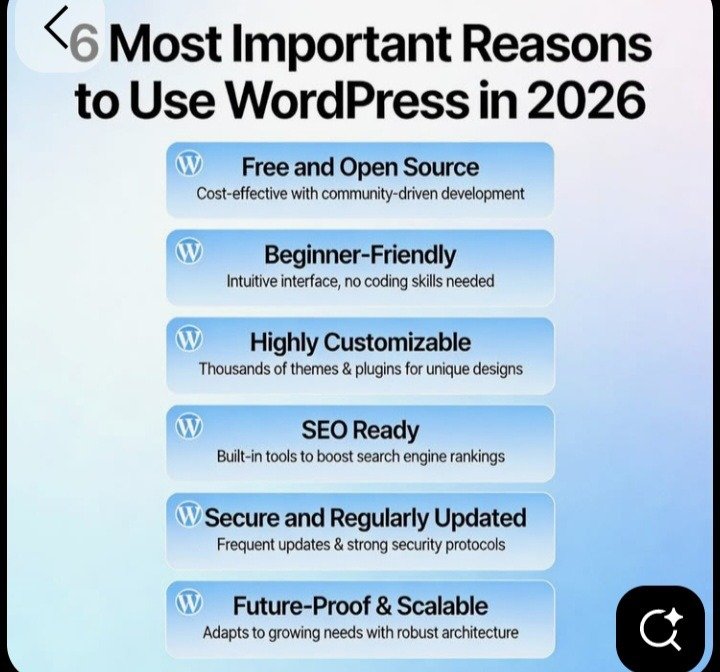
WordPress is an open-source content management system (CMS) that lets you build and manage a website without writing code for every page.
It currently powers roughly four in every ten websites globally, making it by far the most widely used CMS on the internet.
For Nigerian SMEs, that popularity translates into an enormous pool of local developers, affordable Naira-priced hosting, and thousands of ready-made themes and plugins that shorten build time dramatically.
Best suited for:
- Corporate/business websites and landing pages
- Blogs, news sites, and content-driven brands
- Standard e-commerce stores via WooCommerce
- NGOs, schools, churches, and professional services
- Businesses that need to launch in 2–4 weeks on a limited budget
If a content is well managed and a cost-effective launch fits your needs, WordPress development services cover custom design,
WooCommerce setup with local payment gateways and performance hardening from day one.
Do people still use WordPress in 2026?
Yes, WordPress still powers roughly 42–43% of all websites globally as of mid-2026, making it by far the most-used CMS per W3Techs.
Its share has dipped slightly over the past year as builders like Shopify and Wix gain ground, but it still holds about 59–60% of the entire CMS market.
So it remains a strong, actively used choice just facing more competition than a few years ago.
What Is A Custom Website?
A custom website is built from scratch using frameworks like React, Next.js, Laravel, or Node.js, with no dependency on a pre-built CMS.
Every feature, from the database structure to the user dashboard, is engineered around your specific business logic rather than adapted from a generic template.
Best suited for:
- Fintech, payments, and banking platforms
- Marketplaces, booking engines, and logistics/delivery apps
- SaaS products and internal business tools
- High-traffic platforms with strict performance and security requirements
- Businesses planning to scale into millions of users or complex integrations
If your business needs bespoke logic, our custom web development team builds scalable platforms for fintech, logistics, and marketplace businesses.
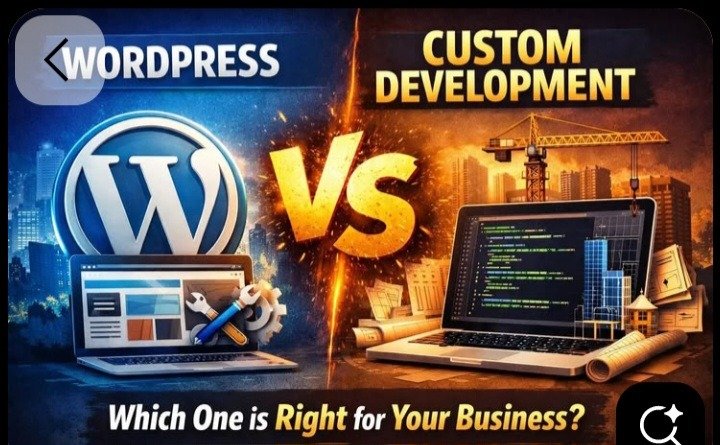
WordPress vs Custom Website: Key Differences At A Glance
Initial cost
- WordPress: Lower typically ₦150,000 to ₦2,000,000
Time to launch
- WordPress: 1–4 weeks
- Custom: 2–6 months or more
Scalability
- WordPress: Good for moderate traffic; may need re-architecture at scale
- Custom: Built to scale from day one
Security
- WordPress: Strong core, but plugin-dependent needs hardening
- Custom: Fully controlled, smaller attack surface
Maintenance
- WordPress: Regular plugin/theme updates required
- Custom: Depends on your dev team or support contract
Uniqueness
- WordPress: Limited by themes/plugins unless custom-coded
- Custom: Fully tailored to your business
SEO capability
- WordPress: Excellent out of the box with the right plugins
- Custom: Excellent, but must be built in deliberately
Best for
- WordPress: SMEs, blogs, standard e-commerce
- Custom: Fintech, marketplaces, SaaS, enterprise tools.
What is replacing WordPress?
Nothing is fully “replacing” WordPres, it still dominates by a wide margin but it’s losing ground on the edges to platforms like Shopify and Wix, which are gaining share among first-time site builders and e-commerce merchants.
For custom, high-performance needs, more developers are choosing headless CMS setups and React-based frameworks instead of traditional WordPress.
Overall, it’s less a replacement and more a slow shift: WordPress keeps its dominant base while newer projects increasingly go elsewhere.
Addressing The Objections Nigerian Business Owners Raise
Isn’t WordPress Insecure And Easy To Hack?
This is the most common objection, and it’s only half true. WordPress core software is actively maintained and receives regular security patches. The real risk comes from outdated or poorly coded third-party plugins and themes, not the platform itself.
A WordPress site on managed hosting, with a web application firewall and a disciplined update schedule, is as secure as most custom builds.
The fix isn’t avoiding WordPress; it’s working with a developer who hardens it properly and doesn’t install unnecessary plugins.
Aren’t Custom Websites Too Expensive For A Small Business?
Not always, it depends on scope. A simple custom-coded landing page can cost less than a heavily customized WordPress build with premium plugins and licenses stacked on top.
What actually drives cost is complexity: user accounts, payment integrations, multi-vendor logic, or real-time features will cost more regardless of platform, because that engineering work has to happen somewhere.
For a standard brochure site or blog, WordPress remains the more economical route.
Doesn’t WordPress Look Generic And Templated?
Only if it’s built that way. A skilled WordPress developer can create a fully custom design and custom functionality on top of WordPress; the CMS is just the engine underneath; it doesn’t dictate how the site looks.
Many enterprise brands, news outlets, and government portals run on customized WordPress builds that look nothing like off-the-shelf themes.
Can I learn WordPress in 3 days?
You can learn the basics of setting up a site, installing themes/plugins, and publishing content in 3 days, since WordPress is designed to be beginner-friendly.
But real proficiency (custom theming, security hardening, performance optimization, troubleshooting) takes weeks to months of hands-on practice.
So in 3 days you’ll be comfortable managing a simple site, not yet skilled enough to build complex, production-ready projects.
How Developers Maintain A Custom Site.
This is a legitimate concern and one reason many Nigerian SMEs lean toward WordPress; its large local developer community means it’s easier to find affordable support when your original developer is unavailable.
If you go custom, budget for an ongoing maintenance or support retainer from the start; a custom site without a support plan is one of the biggest causes of abandoned Nigerian business websites.
Will WordPress Slow Down As My Business Grows?
It can, if left unoptimized. average WordPress page load times run slower than modern frameworks by default, largely due to plugin bloat and shared hosting.
The fix is proactive: quality hosting, caching, image optimization, and a lean plugin stack keep WordPress fast well past the point most Nigerian SMEs need.
If you’re expecting rapid, large-scale traffic growth, think of a viral fintech app or national delivery platform; that’s the point where migrating to a custom or headless architecture starts to make financial sense.
Can WordPress Handle Online Payments With Nigerian Gateways?
Yes. WooCommerce integrates natively with Paystack, Flutterwave, and Interswitch, and it powers a large share of online stores worldwide, so this is well-trodden ground for Nigerian e-commerce.
Where custom development becomes necessary is when you need multi-currency logic, vendor payouts, subscription billing with local billing cycles, or fraud rules beyond what a plugin offers.
If e-commerce is the core of your business, Moreed Digital Solutions is built specifically around Nigerian payment rails, logistics partners, and mobile-first shoppers.
Why This Decision Matters More in Nigeria
Nigeria now has over 100 million internet users, and mobile-first browsing dominates the way customers discover and evaluate local businesses.
That means your website’s speed, mobile responsiveness, and search visibility directly affect whether a potential customer in Lagos, Kano, or Enugu ever reaches your product page. A slow or poorly indexed site regardless of platform quietly costs you leads every single day.
It also means the “cheapest option now” isn’t automatically the smartest long-term one. A WordPress site that gets your business online this month, ranking well and converting visitors, often beats a half-finished custom build six months from now.
Conversely, a fintech or logistics startup that builds an MVP on WordPress and later needs to migrate to custom infrastructure under user growth pressure will pay for that transition twice.
A Simple Decision Framework
Ask yourself these three questions:
1. Does my business need standard features (pages, blog, contact forms, a basic store) or unique workflows (custom dashboards, complex logic, proprietary algorithms)? Standard WordPress or Unique Custom.
2. What’s my realistic budget and timeline?
Under ₦2 million and need to launch within a month with WordPress. Have investment capital and a 3–6 month runway Custom is worth considering.
3. What does growth look like in 24 months? Steady organic growth: WordPress scales fine with good hosting.
Expecting rapid scaling, funding rounds, or heavy engineering demands? Build custom now to avoid a costly rebuild later.
There’s also a middle path many Nigerian businesses overlook: starting on WordPress to validate the business and generate revenue, then commissioning a custom platform once traction and requirements are clear.
This reduces risk without forcing you to over-engineer on day one.
Final Thoughts
There’s no universal winner in the WordPress vs custom website debate, only the right fit for your business stage, budget, and growth plans.
WordPress remains the fastest, most cost-effective way for most Nigerian SMEs, retailers, and service businesses to establish a credible, high-performing online presence.
Our custom development earns its higher cost when your business model depends on proprietary functionality that no CMS can replicate.
The businesses that get this decision right aren’t the ones that pick the trendiest option; they’re the ones that match the platform to their actual requirements, budget honestly for maintenance, and work with developers who build for Nigerian users specifically: mobile-first, payment-ready, and fast on average local connection speeds.