

Search rankings in 2026 are shaped less by isolated metrics and more by how multiple systems reinforce one another.
For several years, performance metrics tied to user experience have attracted intense attention, leading many marketers to treat them as decisive levers for visibility.
That assumption has never fully aligned with how Google evaluates pages at scale.
The idea of a single switch that moves a site from page two to page one remains appealing, especially in competitive industries.
In reality, Google’s ranking systems rely on layered signals that work together to determine relevance, usefulness, and trust.
Performance metrics are part of that ecosystem, but they do not operate in isolation. As algorithms mature, Google continues to prioritize outcomes over mechanics.
Pages that satisfy intent, load reliably, and maintain technical stability tend to perform better over time, not because of one score, but because they reduce friction for users.
That is where performance metrics intersect with content quality, authority signals, and behavioral data.
For businesses investing in SEO as part of a broader digital marketing strategy, understanding how these elements interact matters more than chasing green scores in testing tools.
Core Web Vitals and Google’s Ranking Systems in 2026

Performance metrics tied to user experience remain embedded in Google’s ranking architecture, but their role is often misunderstood.
Google has repeatedly clarified that page experience signals, which include performance, are designed to differentiate between pages that already meet relevance thresholds.
They are not intended to override high-quality content or strong authority signals.
According to Google Search Central documentation, page experience is one of several systems that contribute to rankings when multiple pages offer similar relevance to a query.
This means performance metrics act as comparative signals rather than primary ranking drivers.
When content quality, intent match, and trust signals are equal, user experience can influence ordering. When they are not, performance improvements alone rarely shift rankings.
The transition from First Input Delay to Interaction to Next Paint reinforced Google’s focus on real interaction quality rather than synthetic measurements.
These metrics are derived from field data collected through Chrome users, not lab simulations. As a result, optimization efforts that focus solely on testing tools often miss the broader picture of real user behavior.
In 2026, the core web vitals ranking factor functions as part of Google’s effort to reward pages that do not frustrate users once they arrive.
Pages that are unstable, slow to render primary content, or unresponsive during interaction introduce friction that degrades satisfaction.
Over time, this can suppress performance when competing pages offer similar informational value.
From a practical standpoint, performance optimization delivers diminishing returns after a baseline is met. Moving from poor to acceptable has a measurable impact. Moving from good to perfect rarely does.
This is why we, at Moreed Digital Solutions prioritize performance fixes that remove blockers rather than chasing marginal score improvements that do not translate into visibility or conversions.
Google’s own guidance emphasizes that no single page experience metric guarantees ranking improvements.
Instead, performance metrics support a broader evaluation of whether a page delivers value without unnecessary obstacles.
How SEO Ranking Factors Are Evaluated in 2026
Search visibility in 2026 is determined by how well multiple ranking systems reinforce one another, not by any single metric outperforming the rest.
Google’s documentation consistently emphasizes that its algorithms assess pages through relevance systems, quality classifiers, spam detection, and user experience signals in parallel.
These systems do not operate on a linear checklist. They work as layered filters. At the foundation is relevance. Pages must satisfy query intent clearly and directly.
Google’s ranking systems use natural language processing to understand whether content answers the underlying need behind a search, not just the keywords used.
If a page fails this test, performance metrics and authority signals become irrelevant.
Once relevance is established, quality systems evaluate depth, originality, and usefulness. Google’s helpful content system plays a central role here.
Content that exists primarily to manipulate rankings rather than assist users is devalued, regardless of technical optimization.
This aligns with Google’s guidance published on Search Central, which stresses people-first content as a core ranking priority.
Authority signals are applied next. These include backlinks, brand mentions, and historical trust indicators.
Google continues to rely on links as a way to evaluate credibility across the web. While link quality matters far more than quantity, authoritative references remain difficult to replace with purely on-page improvements.
Only after these layers are satisfied do experience signals meaningfully influence outcomes. This is where the core web vitals ranking factor comes into play.
It helps Google differentiate between pages that already meet relevance and quality thresholds. If two pages answer the same query equally well and carry similar authority, the one that delivers a smoother experience is more likely to perform better.
From a strategic standpoint, this hierarchy explains why sites that obsess over performance scores without addressing content gaps or authority stagnate.
Performance supports rankings. It does not substitute for substance.
That’s why, at Moreed Digital Solutions, we structure SEO strategies around this hierarchy, ensuring that technical improvements reinforce, rather than attempt to replace, foundational ranking signals.
This layered evaluation also explains why ranking volatility often follows content updates rather than performance changes.
Google adjusts relevance and quality systems far more frequently than it recalibrates experience signals.
The Role of Backlinks in Modern Search Rankings
Backlinks remain one of the strongest external signals used to evaluate credibility and trust in organic search.
Despite recurring claims that links are losing relevance, Google representatives have consistently confirmed that links continue to play a meaningful role in ranking systems.
What has changed is how they are interpreted.
In 2026, backlinks are assessed primarily through context, source authority, and editorial intent. Links embedded naturally within relevant content carry more weight than those placed in footers, directories, or templated sections.
Google’s spam detection systems are highly effective at discounting manipulative link patterns, which is why large-scale link schemes rarely produce sustained gains.
Authoritative links signal that a page or brand is referenced voluntarily by others with topical expertise.
This reinforces trust signals that algorithms struggle to infer from on-page content alone. While content quality can be evaluated directly, credibility often relies on external validation.
The relationship between links and performance metrics is complementary rather than competitive. A fast, stable page without authority rarely ranks.
A highly authoritative page with poor usability can still rank, but it becomes vulnerable when competitors offer comparable authority with better user experience.
This is where experience signals act as modifiers rather than drivers.
In local and commercial queries, backlinks also influence how Google understands prominence. Citations, local links, and mentions across trusted platforms help establish legitimacy within a geographic or topical space.
According to Google’s local search documentation, prominence is influenced by information gathered from across the web, including links, articles, and directories.
For digital marketing teams, this reinforces the need for balanced investment. Link acquisition without technical stability creates friction. Performance optimization without authority limits reach.
Agencies that integrate both tend to focus link strategies around content assets that naturally attract references, rather than pursuing volume-driven outreach that carries risk.
Backlinks are not diminishing in importance. They are becoming harder to manipulate and more closely tied to genuine reputation.
What Drives Visibility in Local Search Results
Local search operates on a related but distinct set of signals that prioritize proximity, relevance, and prominence.
Among these, prominence remains the most difficult to influence quickly, yet it has the strongest impact on sustained visibility. Prominence reflects how well-known and trusted a business appears both online and offline.
Google evaluates prominence using signals such as reviews, citations, brand mentions, backlinks, and overall web presence.

Businesses with consistent information across directories, strong review profiles, and authoritative references tend to outperform competitors, even when physical proximity is similar.
Performance metrics still matter, but their role is indirect. A slow or unstable page increases bounce rates and reduces engagement, which can suppress conversion signals over time.
However, local rankings are far more sensitive to trust indicators than marginal performance improvements.
For example, a local service business with strong reviews, accurate listings, and relevant backlinks will typically outrank a technically perfect site with weak brand signals.
This reinforces Google’s emphasis on real-world credibility over synthetic optimization.
Digital marketing strategies aimed at local growth benefit most from aligning SEO, reputation management, and content distribution.
Publishing locally relevant content, earning coverage from regional publications, and maintaining consistent brand signals across platforms strengthens prominence.
Performance optimization ensures that once users arrive, friction does not undermine those gains.
In 2026, the core web vitals ranking factor supports local SEO indirectly by improving engagement and conversion outcomes.
It does not override trust, relevance, or geographic signals. Understanding this balance prevents misallocated effort and supports sustainable local visibility.
How Performance Metrics Support Digital Marketing Beyond Rankings
Performance metrics, including the core web vitals ranking factor, extend their influence beyond search placement.
While Google emphasizes content quality and authority in ranking decisions, the user experience directly affects engagement, conversions, and retention, which are central to digital marketing outcomes.
Understanding this allows marketers to treat performance optimization as an investment in commercial performance, not just SEO.
Page speed, layout stability, and interactivity determine whether visitors remain engaged long enough to complete desired actions.
Metrics like Largest Contentful Paint (LCP) and Cumulative Layout Shift (CLS) provide measurable insights into these experiences.
Studies from Google indicate that even a one-second delay in page load can reduce conversion rates by 7 percent.
Sites optimized for responsiveness and stability create frictionless journeys, reinforcing marketing campaigns across channels.
For paid advertising campaigns, landing page performance influences both cost and efficiency.
Slow or unstable pages increase bounce rates, which can reduce Quality Score in Google Ads, thereby raising cost-per-click.
Additionally, users who encounter broken or shifting elements are less likely to trust the brand, which diminishes remarketing effectiveness.
Optimizing for core web vitals ensures that digital marketing campaigns operate efficiently, maximizing ROI from both organic and paid channels.
Agencies integrate performance metrics into holistic marketing strategies. Rather than viewing page speed as a standalone project, optimization is coordinated with content strategy, link building, and CRO initiatives.
This approach ensures that every touchpoint, from organic search to email click-throughs, reinforces user satisfaction and brand credibility.
Beyond conversion rates, performance optimization also supports retention and brand perception.
Visitors are more likely to return to sites that load reliably, interact predictably, and provide immediate access to critical content.
Metrics collected from field data, such as Interaction to Next Paint (INP), offer actionable feedback for ongoing digital marketing improvements.
By leveraging these insights, marketers can prioritize interventions that yield measurable business results, rather than chasing theoretical ranking advantages alone.
Ultimately, performance metrics do not function in isolation. They support the broader digital marketing ecosystem by enhancing user experience, lowering friction, and improving conversion potential.
Optimizing for these signals complements the core web vitals ranking factor while driving tangible outcomes for brands across channels.
Where Core Web Vitals Still Provide Competitive Advantage
Even though the core web vitals ranking factor does not override content quality or authority, it provides a competitive edge in crowded markets where multiple pages offer similar relevance.
In 2026, websites that achieve baseline scores in LCP, CLS, and INP consistently outperform peers when other ranking signals are comparable.
This advantage is most evident in industries with high churn or transactional intent. E-commerce platforms, SaaS providers, and service-oriented sites benefit from faster rendering and more predictable interactions because users can complete purchases or forms without delay or frustration.
Field data indicates that improving LCP from 4.0 to 2.5 seconds can increase conversion rates by as much as 15 percent, demonstrating that performance optimization is not theoretical, but commercially relevant.
Content-heavy sites, such as blogs and news outlets, also see measurable engagement benefits.
Articles that load quickly and remain stable while scrolling encourage users to consume more content, increasing session duration, page views, and ad revenue potential.
Agencies often combine content strategy with performance improvements to maximize both reach and engagement.
For marketers, the competitive advantage lies not only in the ranking effect but in the user behavior it influences.
Faster, more stable sites reduce bounce rates, increase repeat visits, and enhance the likelihood of social sharing.
These outcomes amplify other marketing efforts, including email campaigns and social media promotions, by ensuring that landing pages consistently deliver positive user experiences.
The core web vitals ranking factor also intersects with brand perception. In 2026, users expect fast, stable, and interactive sites as a baseline.
Websites that fail to meet these expectations risk reputational damage, which can affect customer acquisition costs and lifetime value.
Conversely, websites optimized for these metrics project professionalism and trustworthiness, complementing broader digital marketing objectives.
In practice, achieving a competitive advantage requires a focus on real user experience improvements rather than chasing lab scores.
Agencies optimize images, streamline scripts, implement efficient hosting, and monitor field data continuously.
This ensures improvements are tangible and sustainable, aligning technical work with measurable business impact rather than simply satisfying tool-based benchmarks.
Prioritizing Optimization in 2026 Without Chasing Scores
Digital marketing teams must understand the distinction between core web vitals as a ranking factor and performance optimization as a business driver.
Over-prioritizing lab scores or chasing perfect metrics often leads to wasted resources with minimal impact.
Instead, optimization should focus on areas that deliver measurable improvements in engagement, conversion, and brand perception.
The first step is establishing baseline performance. Pages that exceed critical thresholds in LCP, CLS, and INP create a foundation where further improvements provide diminishing returns.
Once thresholds are met, resources are better allocated toward content quality, link acquisition, and CRO efforts.
Data-driven prioritization is key. Field data collected through Chrome UX reports or other real user monitoring tools provides actionable insights.
Pages with the highest traffic or highest conversion potential should be optimized first, as gains there yield the most substantial business impact.
Agencies such as Moreed Digital Solutions often implement continuous monitoring dashboards to ensure optimization remains aligned with commercial objectives.
Integration with broader digital marketing campaigns is also crucial.
Performance improvements should complement paid advertising, email marketing, and social campaigns to ensure that user experiences reinforce campaign objectives.
Optimizing images, reducing render-blocking scripts, and implementing responsive designs are tactics that benefit multiple marketing channels simultaneously.
Finally, ongoing testing ensures that optimizations remain effective as content, scripts, and user behavior evolve.
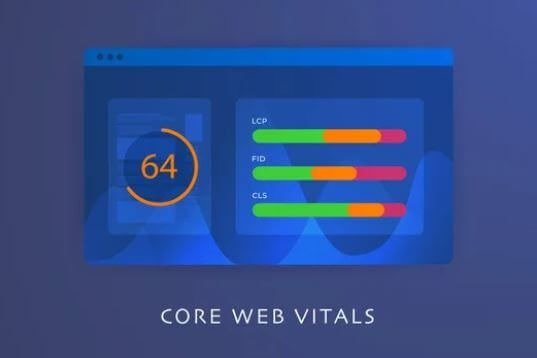
Core web vitals metrics are dynamic, influenced by both content changes and user interaction patterns.
Continuous monitoring allows marketers to maintain performance levels that support SEO and conversion outcomes without falling into the trap of chasing metrics in isolation.
By focusing on impact-driven optimization rather than chasing perfect scores, marketers balance effort, cost, and benefit.
The core web vitals ranking factor remains a useful signal, but its true value lies in its ability to support broader digital marketing success, enhancing visibility, engagement, and conversions.
Integrating Core Web Vitals Into Marketing Campaigns
In 2026, incorporating core web vitals into broader marketing campaigns requires a strategic approach.
Technical optimization alone does not guarantee improved visibility or conversions. Instead, marketers should align page performance improvements with campaign objectives to maximize impact.
Start by identifying high-traffic and high-value landing pages that are central to ongoing campaigns.
These include product pages, service offerings, and key content assets.
Optimizing these pages for Largest Contentful Paint (LCP), Cumulative Layout Shift (CLS), and Interaction to Next Paint (INP) ensures that visitors encounter minimal friction during interactions, which directly supports conversion goals.
Linking performance improvements to campaign analytics amplifies their value.
For example, faster-loading product pages increase engagement rates from paid traffic, improve Quality Score in Google Ads, and enhance remarketing effectiveness.
By measuring performance alongside engagement and conversion metrics, marketers can demonstrate tangible returns from optimization efforts.
Agencies emphasize coordination between technical teams, content strategists, and campaign managers.
This integration allows technical improvements to reinforce messaging and creative work. It ensures that a fast-loading, stable landing page complements a well-targeted paid campaign or high-performing email flow, rather than existing in isolation.
Additionally, monitoring field data allows marketers to prioritize ongoing enhancements.
Pages with frequent content updates, dynamic components, or seasonal campaigns benefit from continuous observation to prevent regressions in experience metrics.
This proactive approach maintains baseline performance while optimizing for user satisfaction and campaign efficiency.
Strategically, this integration ensures that the core web vitals ranking factor is not treated as a checklist item but as a measurable contributor to broader marketing outcomes.
Every improvement in load speed, stability, and interactivity enhances the ability of digital marketing campaigns to generate leads, nurture prospects, and convert users efficiently.
Key Takeaways for SEO and Digital Marketing Teams
Understanding the role of core web vitals in 2026 requires a balanced view. They remain part of Google’s ranking systems, but their influence is comparative rather than absolute.
Pages with equivalent content quality and authority benefit from stronger performance metrics, but performance alone does not secure higher rankings.
Marketers should prioritize:
- Baseline Optimization: Ensure LCP, CLS, and INP meet recommended thresholds. Once achieved, focus on content quality, authority, and relevance.
- Integration With Campaigns: Align technical optimization with paid, organic, and email marketing efforts to maximize conversion and engagement.
- Data-Driven Prioritization: Use field data to identify pages with the highest potential impact, rather than chasing perfect scores across all pages.
- Continuous Monitoring: Core web vitals metrics are dynamic. Regular evaluation ensures sustained performance, particularly for pages with frequent updates or high engagement.
- Holistic SEO Strategy: Combine content relevance, backlinks, local signals, and performance metrics. Agencies like Moreed Digital Solutions demonstrate that layered strategies outperform single-metric optimization.
This approach allows businesses to leverage performance metrics for both SEO and broader marketing impact.
Core web vitals act as a multiplier rather than a replacement, enhancing outcomes for campaigns, conversions, and user satisfaction.
Conclusion
Core web vitals remain a relevant ranking factor in 2026, but their role is nuanced. They function as part of a larger system that evaluates relevance, content quality, authority, and trust.
Optimizing these metrics enhances user experience, improves engagement, and indirectly supports search visibility, particularly when competing pages offer similar relevance and authority.
Backlinks continue to serve as a critical trust signal, and local search emphasizes prominence through citations, reviews, and brand consistency.
Performance metrics support these outcomes by reducing friction, increasing conversions, and strengthening campaign efficiency.
For digital marketers, the takeaway is clear: treat the core web vitals ranking factor as a tool to enhance overall marketing performance rather than as a shortcut to higher rankings.
Combining technical optimization with high-quality content, authoritative backlinks, and local credibility ensures sustainable success across organic, paid, and local search campaigns.
By integrating performance improvements into comprehensive strategies, teams can drive measurable business results while maintaining alignment with Google’s evolving ranking systems.
Agencies demonstrate that this layered approach balances SEO requirements with marketing objectives, creating tangible commercial impact.
In 2026, understanding the interplay between user experience, authority, and content quality is more important than ever.
Core web vitals are part of the equation, but only when optimized in context.



Core Web Vitals in 2025: What Has Changed and What’s New – Moreed Digital Solutions: Digital Marketing Agency in Nigeria
January 10, 2026[…] factors like responsiveness, input delay, and visual consistency are becoming key players in whether your site climbs or slips down the […]