
Most Nigerian businesses are not short on content. They are short on content that sells. Walk through any Instagram feed or company blog in Lagos, Abuja, or Port Harcourt and you will find flyers, motivational quotes, and product photos published with no clear path to a sale.
That is activity, not strategy, and it is the single biggest reason content marketing gets written off as “not working” by business owners who have tried it.
A proper content marketing strategy for Nigerian businesses is different. It starts with the customer’s buying journey, not the brand’s publishing calendar. It treats content as a system that moves a stranger from “I’ve never heard of you” to “I trust you enough to pay you” and it measures itself by leads and sales, not likes.
This guide breaks down exactly how to build that kind of strategy: one that fits Nigeria’s data costs, payment behaviour, trust deficit, and social media habits, and that produces measurable conversions rather than vanity metrics.
What Are The 7 Cs In Marketing?
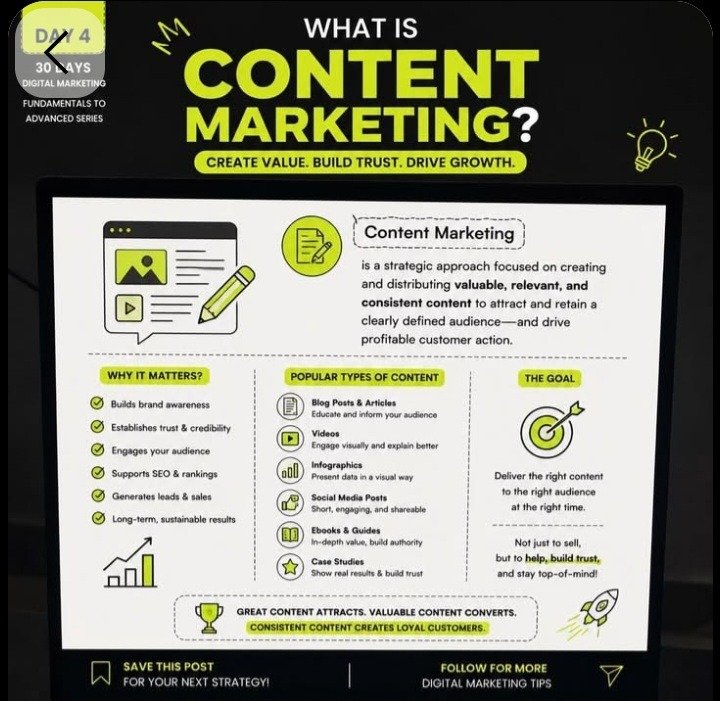
The most common versions are Customer, Content, Context, Community, Convenience, Cohesion, and Conversion. Puts the customer at the center of a marketing strategy that guides them from engagement to action.
An older variant reframes the traditional 7 Ps (Product, Price, Promotion, etc.) from the buyer’s perspective as Consumer, Cost, Communication, Convenience, Caring, Co-ordinated, and Confirmation.
There’s no single official standard, so the exact 7 Cs can vary by source or course.
Why Content Marketing In Nigeria Has So Much Untapped Potential
The opportunity is bigger than most business owners realise. Nigeria now has around 109 million internet users, putting internet penetration at roughly 45.5 percent of the population and that number keeps climbing every month as data becomes cheaper and 4G/5G coverage expands.
Nigeria also carries close to 48 million social media user identities, which means tens of millions of potential customers are already scrolling, searching, and asking questions online.
At the same time, the businesses competing for that attention are numerous but under-resourced. SMEDAN and the National Bureau of Statistics estimate that Nigerian MSMEs number more than 41 million and contribute almost half of the country’s GDP.
That is a lot of noise but very few of those businesses are publishing content with any strategic intent. Globally, content marketing has matured into a core function: 73 percent of B2B and 70 percent of B2C marketers now run on a documented content strategy, and organizations with a written strategy consistently outperform those without one.
Nigerian businesses that adopt the same discipline early have a real first-mover advantage in their niche.
In short: the audience is online, the competition is mostly unstrategic, and the businesses that professionalize their content now will own the search results and social feeds their competitors are still ignoring.
Why Most Nigerian Businesses Content Doesn’t Convert
Before building the strategy, it helps to name what’s broken in the current approach:
● No defined buyer: Content is written for “everyone,” which means it persuades no one. See our guide on content writing services for businesses for a fix.
● Platform-first, not customer-first thinking: Businesses ask “what should I post on Instagram today?” instead of “what question is my customer asking right now?”
● No funnel: Every post is a hard sell. There’s nothing for a cold audience that isn’t ready to buy yet, and nothing that nurtures the ones who are “just looking.”
● Vanity metrics as the scoreboard: Likes and follower counts are tracked; leads, WhatsApp inquiries, and actual sales are not.
● Zero repurposing: A single blog post or video is created once and never adapted for the three or four platforms where the target customer actually spends time.
Fixing these five issues is, in effect, the entire strategy.Here’s how to do it step by step.
What Are The 4 Principles Of Marketing?
The 4 Ps of marketing according to McCarthy’s marketing mix:
Product: what you’re offering and how it meets customer needs
Price: what customers pay and how it’s positioned against value/competitors
Place & Promotion: where/how it’s distributed, and how you communicate and sell it
Step 1: Define Your Ideal Nigerian Customer Before You Write Anything
Every conversion-focused content strategy starts with a specific person, not a demographic.
Go beyond “women aged 25–40 in Lagos” and get to: what they’re worried about, what they’ve already tried, what objections stop them from buying, and where they hang out online (WhatsApp status, Instagram, TikTok, Facebook groups, Google search).
For a Lagos based skincare brand, that might mean a 28-year-old professional who has been scammed by a fake “organic” product before and now Google’s ingredient lists before buying anything.
For a B2B logistics company, it might mean an SME owner who cares more about reliability and proof of past deliveries than flashy branding. This detailed walkthrough on creating buyer personas for the Nigerian market covers the exact questions to ask your existing customers to build this out properly.
Step 2: Build Your Strategy Around Search Intent, Not Just Social Trends
Ranking on Google for terms your customers actually type is one of the most underused conversion channels in Nigeria, because few local competitors are doing proper SEO, that’s why your business need this our guide on Google Ranking for Abuja Businesses How to Get Your Business Found online in 2026 is worth reading.
Start with keyword research that reflects real Nigerian search behaviour including pidgin phrasing, local brand comparisons like, best POS machine in Nigeria, and price driven web searches.
A strong keyword foundation beings with understanding of Google values, our Core Web Vitals guidelines for 2026 explain the technical factors that will improve your search rankings.
Group your keywords by intent:
● Informational: How to start an online store in Nigeria,and top of funnel blog content that builds trust and organic traffic.
● Comparison/consideration: Best accounting software for Nigerian SMEs content that positions your brand against alternatives.
● Transactional: Buy “generator online Lagos”, “affordable wedding photographer Abuja” landing pages and product content designed to close the sale.
Getting this mapping right is what separates a content marketing strategy in Nigeria that just generates traffic from one that generates buyers.
Step 3: Choose Channels Based on Where Your Buyers Already Are Not Where Everyone Else Is Posting
Not every Nigerian business needs to be on every platform. Channel choice should follow the customer, not trends:
● WhatsApp: Still the highest-trust, highest-conversion channel for Nigerian SMEs, especially for closing sales after a lead is warmed up elsewhere. Broadcast lists and status updates work well for retail and services.
● Instagram: Strong for visually driven categories: fashion, food, beauty, real estate, events.
● TikTok: Best for reaching younger audiences and building organic reach quickly, especially with tutorial and behind-the-scenes content.
● Google/SEO blog content: Best for capturing people already searching with buying intent, and for building long-term, compounding traffic that doesn’t disappear when you stop posting.
● Email/SMS: Underused in Nigeria but highly effective for nurturing leads who aren’t ready to buy immediately, particularly for higher-ticket products and services.
Our channel on types of digital marketing walks through and breaks down the best marketing channels and how to prioritize based on your product price point and sales cycle.
The key discipline here is depth over spread; three channels done consistently will outperform seven channels done sporadically.
What is rule 7 in marketing?
The “Rule of 7” in marketing: a prospect typically needs to see or hear your message at least 7 times before they take action, like and buying. It comes from repeated exposure building familiarity and trust.
This is why consistent, repeated marketing across multiple touch points outperforms a single one-off campaign.
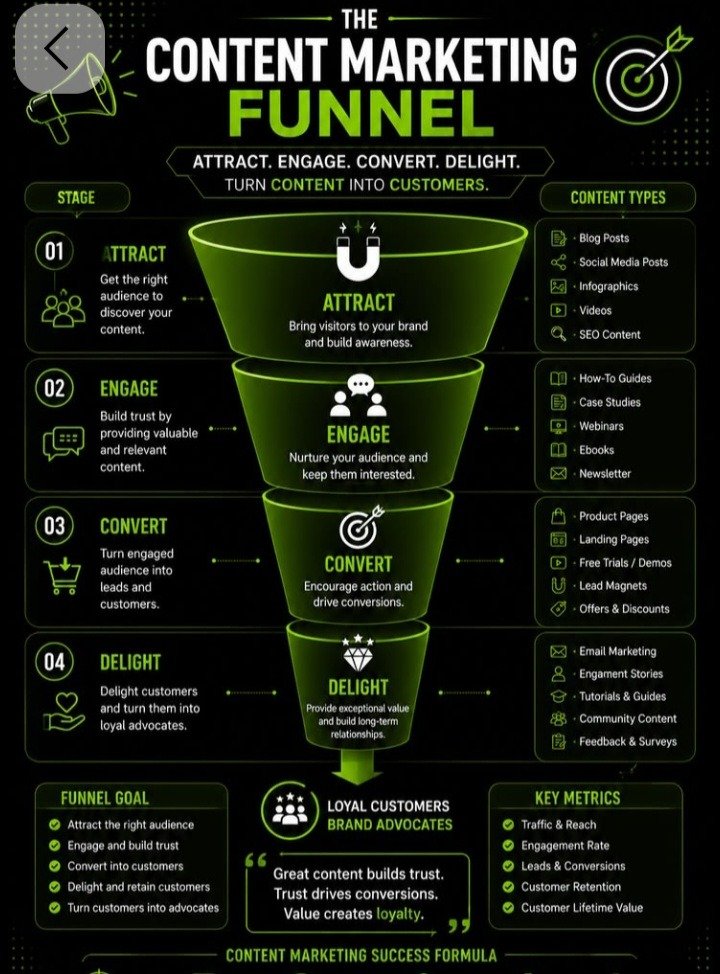
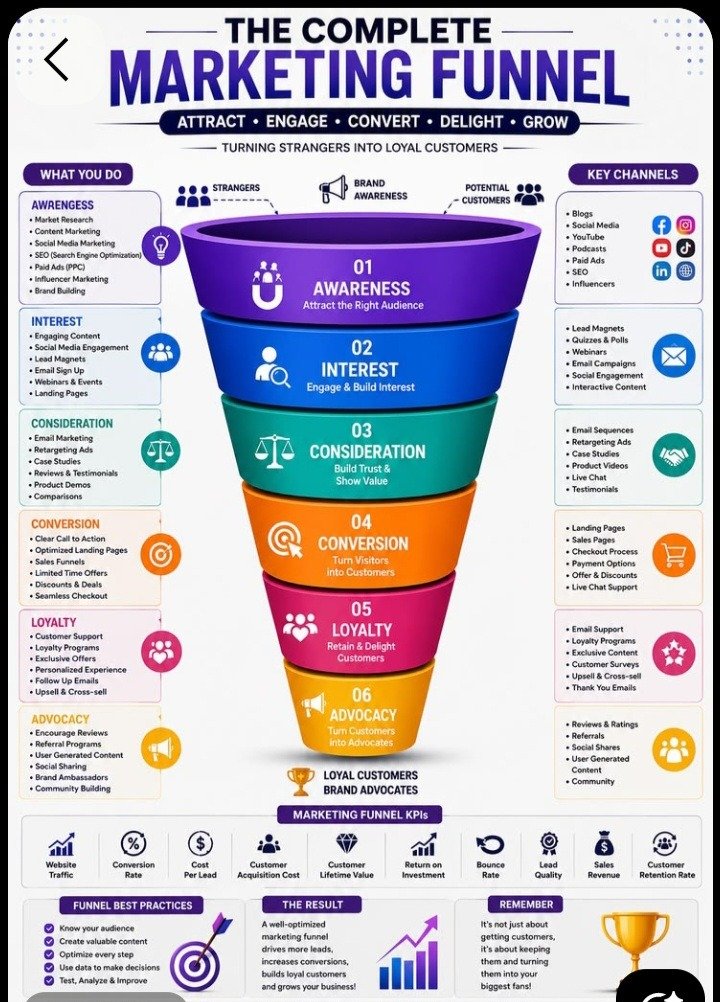
Step 4: Build a Content Funnel, Not a Content Calendar

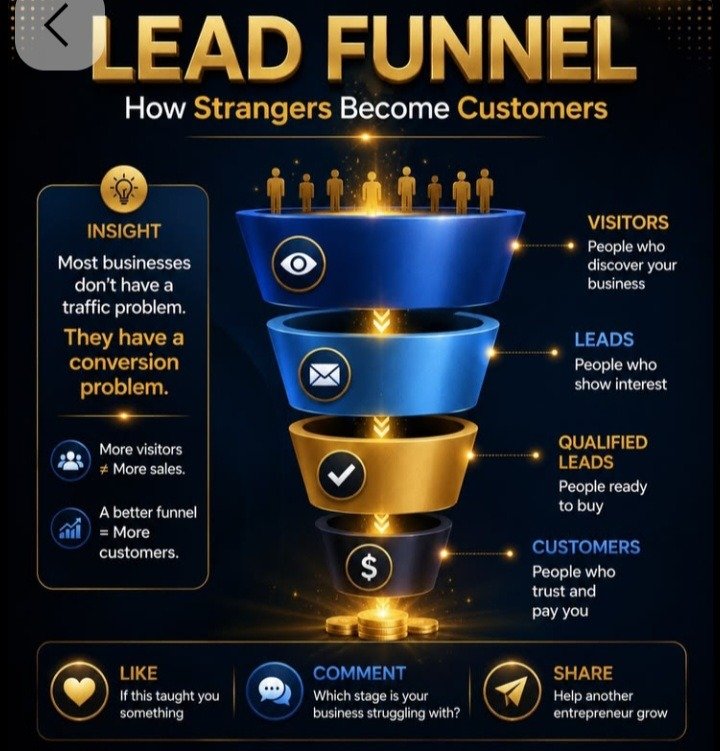
A content calendar tells you what to post and when. A content funnel tells you why and that “why” is what drives conversions.
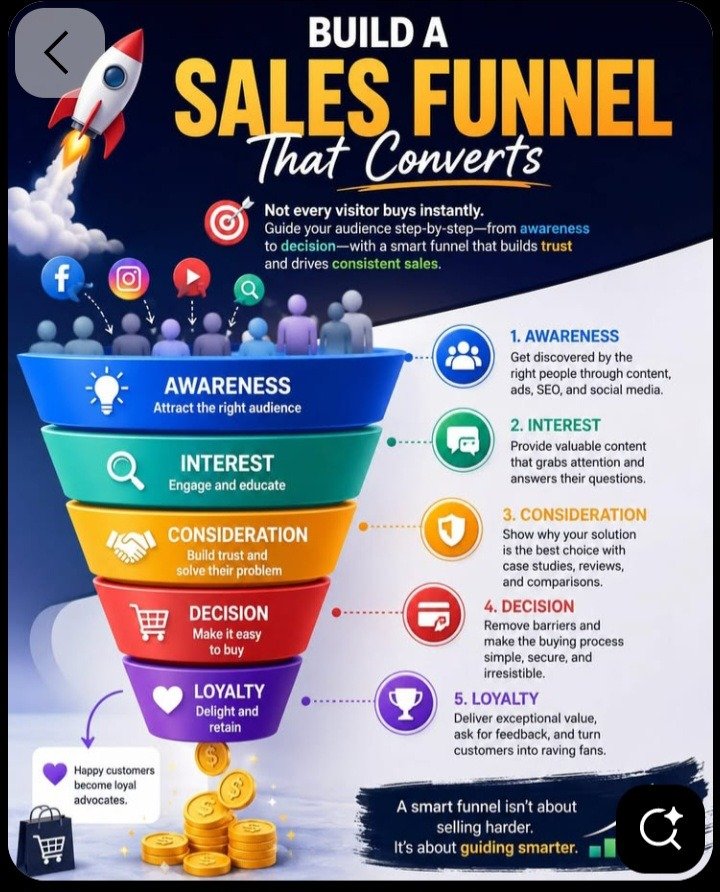
Structure your content across three stages:
● Top of funnel (awareness): Educational content that answers questions your ideal customer is already asking, with no hard sell. Blog posts, explainer videos, “how to choose” guides.
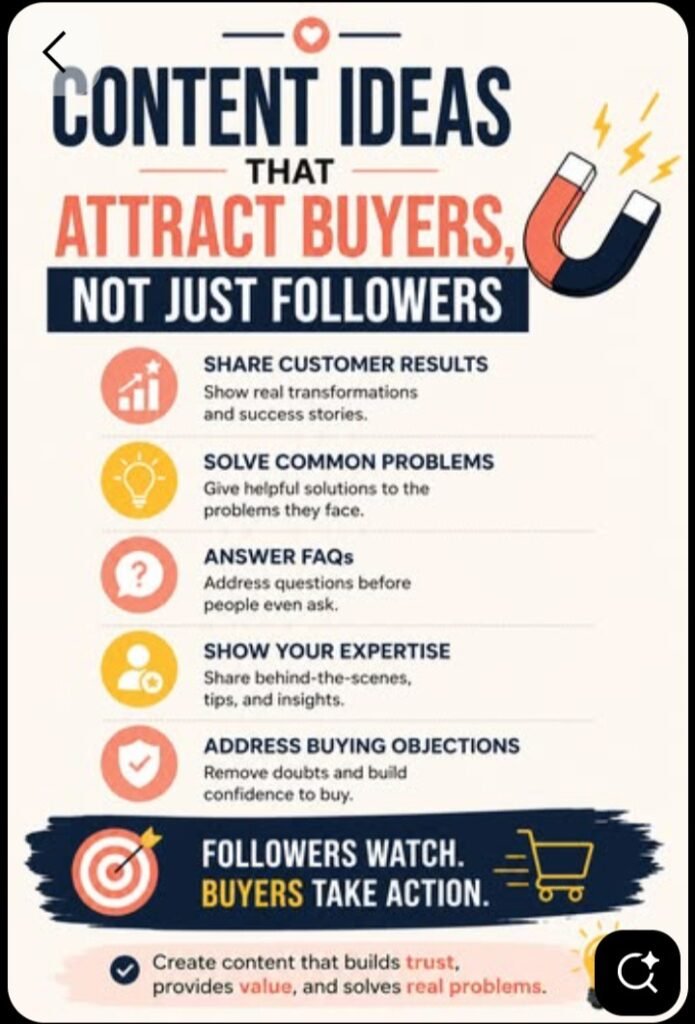
● Middle of funnel (consideration): Content that builds trust and differentiates you from competitors case studies, comparison posts, behind-the-scenes content, customer testimonials, FAQs that handle objections before they’re raised.
● Bottom of funnel (conversion): Content designed to close product demos, limited-time offers, clear calls to action, pricing transparency, and social proof placed right before the “buy” or “book now” button.
This structure matters because roughly 40 percent of B2B marketers globally cite creating content that prompts a desired action as their top challenge and that gap almost always traces back to skipping the middle and bottom of the funnel in favour of pure awareness content.
Step 5: Localize Everything Language, Currency, and Cultural Context
Content translated from abroad underperforms in Nigeria because it doesn’t reflect how people actually talk, pay, or make decisions here. Localization means:
● Writing in the natural mix of English and Nigerian expressions your specific audience uses without forcing pidgin where it doesn’t fit your brand voice.
● Quoting prices in naira, and being upfront about them, hidden pricing is a major trust killer in a market where customers have been burned by bait-and-switch tactics.
● Referencing local pain points directly: power outages, delivery logistics across states, bank transfer vs. POS realities, and trust concerns around online payment.
● Using testimonials and case studies from recognisably Nigerian customers, not stock imagery or foreign case studies that feel disconnected from local reality.
This is also where a well-run WhatsApp and Instagram presence outperforms a beautifully designed but generic website Nigerian buyers convert faster when the content feels like it was made for them, not translated at them.
Step 6: Repurpose Every Piece of Content Across Multiple Formats
Creating original content is expensive in time and effort, so don’t let a single blog post or video die after one use. One well-researched article can become:
● A carousel post for Instagram
● A short form video script for TikTok or Reels
● A WhatsApp broadcast summary with a link back to the full piece
● An email newsletter section
● Three or four standalone social captions spread across the following weeks
This “create once, distribute many times” approach is how lean Nigerian marketing teams compete with bigger budgets.
See our content writing for a practical breakdown of how to turn one blog post into two weeks of content across four platforms.
Step 7: Measure Conversions, Not Just Reach
If you can’t tie content back to leads, WhatsApp inquiries, or sales, you’r flying blind and you’ll eventually (wrong) conclude that content marketing doesn’t work for Nigerian businesses.Track:
● Click-throughs from social bios and posts to your website or WhatsApp link
● Form submissions, WhatsApp chats started, or calls booked per piece of content
● Which blog posts or videos are actually driving inquiries, not just views
● Cost per lead by channel, so you can double down on what’s working
Globally, organizations with a documented, measured content strategy see meaningfully more leads per dollar spent than those without one; the discipline of measurement is what turns content from an expense into an investment.
For a full breakdown of what to track, read our guide on how to track marketing performance for small teams.
A Simple 90-Day Framework to Get Started
If you’re starting from scratch, don’t try to do everything at once. Use this sequence:
- Weeks 1–2: Define your buyer persona and map 20–30 keywords/topics by intent.
- Weeks 3–4: Set up your core channels (pick 2–3 max) and build a simple funnel-based content calendar.
- Weeks 5–8: Publish consistently aim for 2–3 tops of funnel pieces per week, repurposed across channels while building out 3–5 middle of funnel trust pieces (case studies, testimonials, FAQs).
- Weeks 9–12: Introduce bottom of funnel conversion content offers, demos, clear CTAs and start tracking cost per lead by channel. Cut what isn’t converting, double down on what is.
Common Mistakes to Avoid Along the Way
● Chasing every new platform instead of mastering two or three that fit your buyer.
● Publishing without a CTA. Every piece of content should tell the reader what to do next.
● Ignoring SEO because “Nigerians don’t search Google” they do, especially for comparison and price driven queries.
● Copying competitors’ content instead of solving your specific customer’s specific problem.
● Giving up after 30 days. Content marketing compounds; most businesses quit right before it starts working.
Final Thoughts
A content marketing strategy for Nigerian businesses that actually converts isn’t about posting more, it’s about posting with intent, at every stage of the buyer’s journey, on the channels your specific customers actually use, and localized to how they really think and pay.
Get the persona, the funnel, and the measurement right, and content stops being a cost centre and starts becoming your most reliable source of leads.
If you’re building this out for your own business, start with your buyer persona and your funnel structure; everything else in this guide builds on those two foundations.



Best Free SEO Tools For Nigerian Businesses In 2026 – Moreed Digital Solutions: Digital Marketing Agency in Nigeria
October 14, 2026[…] Moreed Digital Solutions explains in its guide to content marketing strategy for Nigerian businesses, ranking on Google for terms your customers actually type is one of the most underused conversion […]
How Much Does Content Writing Cost In Nigeria? Agency vs Freelancer vs In-House (2026) – Moreed Digital Solutions: Digital Marketing Agency in Nigeria
October 17, 2026[…] just write posts. It builds a plan that connects them to leads and sales. Moreed’s guide to content marketing strategy for Nigerian businesses shows how funnels, channels, and localization turn articles into inquiries. Agencies such as Moreed […]